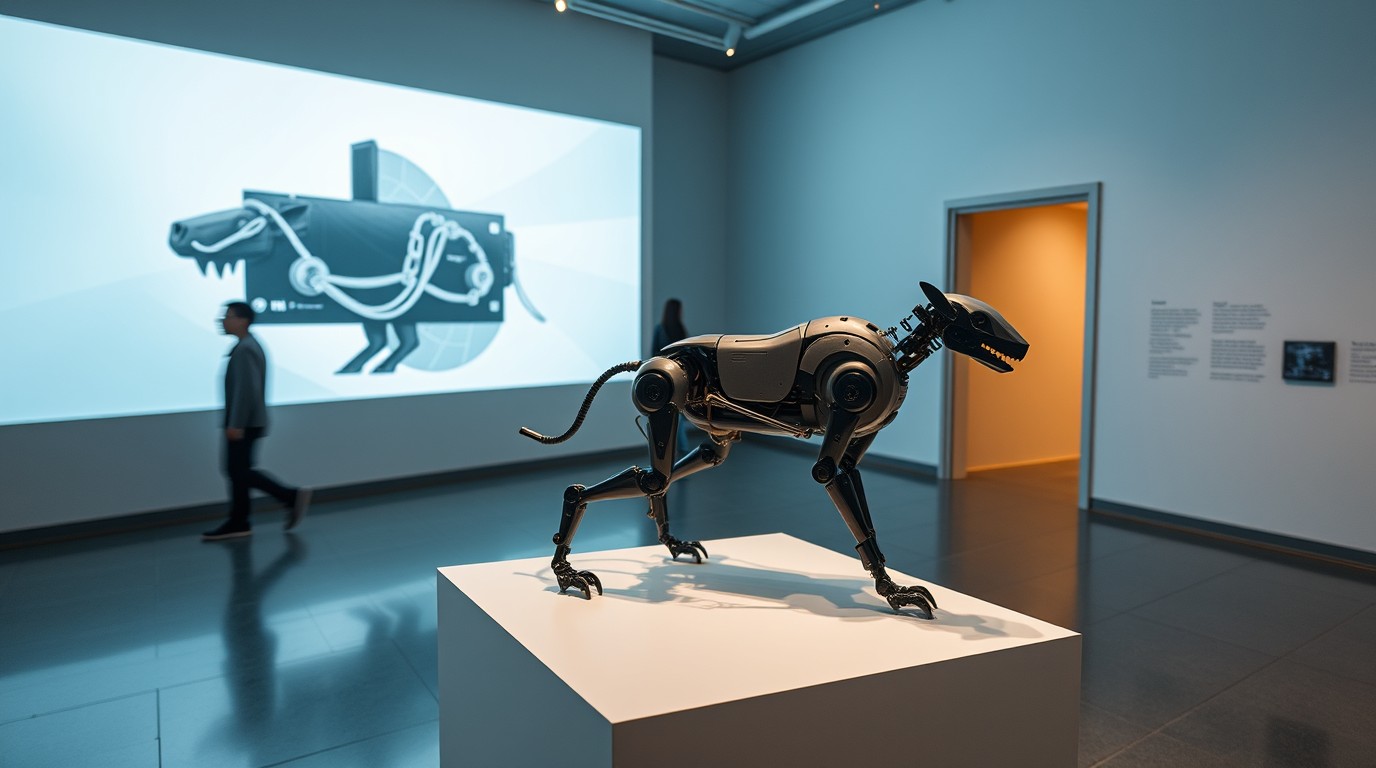
On October 9, 2026, the Franz Mayer Museum opened the exhibition AI: More than Human, created by the Barbican Centre in London. It brings together 185 pieces on the history, uses and dilemmas of artificial intelligence and will remain in the Centro Histórico until April 4, 2027.
This is the first time this Barbican touring show has reached Mexico, after presentations in the Netherlands, Spain, China, Canada and the United States, as reported by Milenio. The curatorial starting point predates computers: different cultures already imagined artificial beings and technologies capable of surpassing human capabilities. For Mexico's public conversation the detail carries weight, because the country is debating artificial intelligence governance frameworks while the show moves that debate into a museum in the Centro Histórico, with accessible admission and a visit program also designed for people with visual disabilities. Corriente Alterna, the journalism portal of UNAM, documented the curatorial structure on October 22 and noted that the tour connects the historical roots of the subject with its everyday uses.
The show, co-produced with Forum Groningen and curated by Suzanne Livingston and Maholo Uchida, is organized into four sections: The Dream of AI, Mind Machines, Data Worlds and Endless Evolution. Among the pieces are ROBOTa, by Agnieszka Pilat, in which a robot dog named Basia draws live, and the installation Synthesizing Obama (2017), developed by the University of Washington. The museum also lends Ray-Ban Meta glasses for 40 minutes within the Hey, Franz program, an expanded visit developed with Meta, CENTRO and Ojos que Sienten. Visits run Tuesday to Sunday, from 10:00 to 17:00; general admission costs 180 pesos and 100 pesos for students, teachers and older adults with credentials.
The exhibition remains open until April 4, 2027, and the venue maintains parallel programming during that period. The signal for cultural policy is concrete: museums in the Centro Histórico are positioning themselves as infrastructure for technological literacy, with accessible formats and differentiated pricing that broaden the audience engaging with the debate on artificial intelligence.
This article was written with the assistance of artificial intelligence from verified sources and reviewed by a human editor before publication.