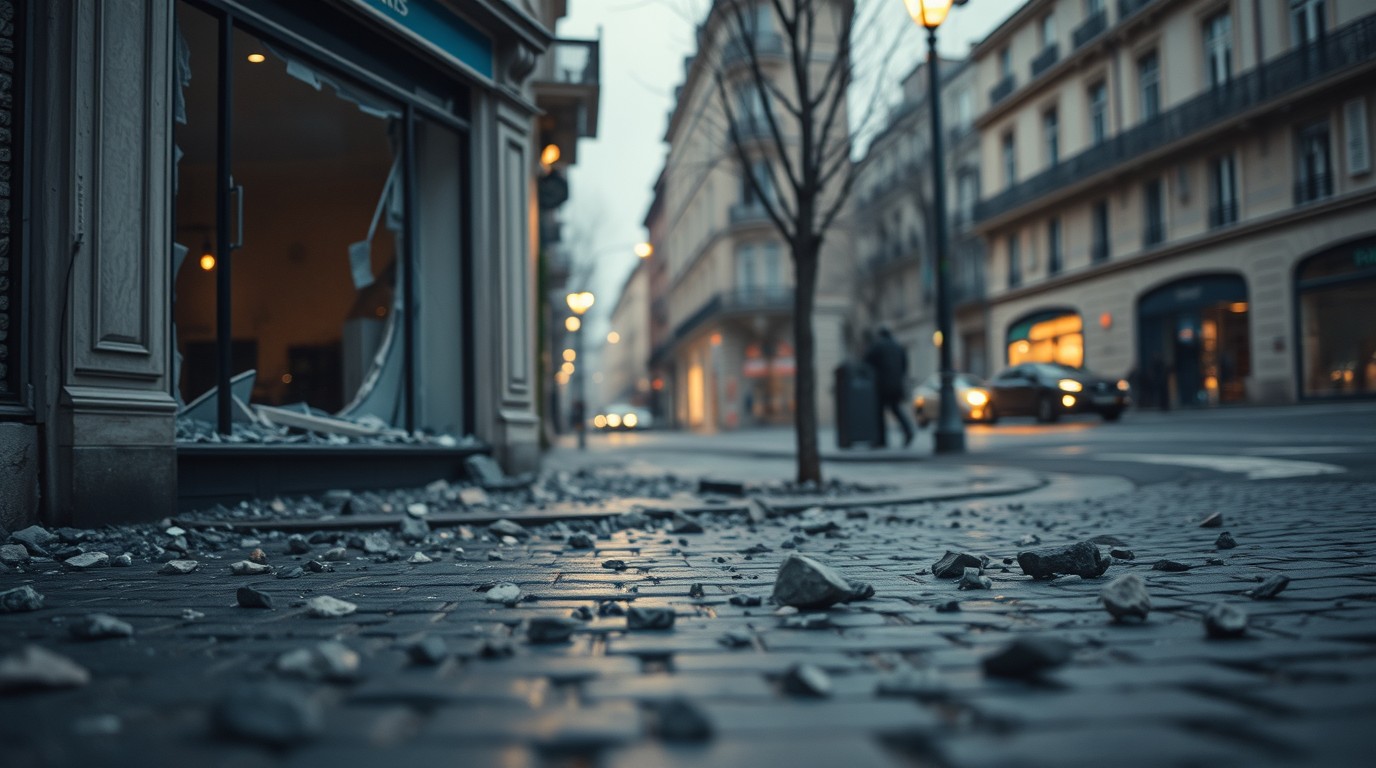
France counted 1,800 arrests and around 1,500 businesses looted or destroyed after the protests of Saturday, October 17, 2026, the widest unrest toll reported in decades by the Ministry of the Interior, according to figures published by El País on Sunday, October 18.
The day was called by students, teachers, firefighters, pensioners and the yellow vest movement to denounce the cost of living, the price of gasoline and the deterioration of public education. The Ministry of the Interior put participation at 550,000 people nationwide, while unions raised the figure to 800,000. The Guardian's live coverage also documented parallel unrest in Milan, with around 50 protesters arrested and two police officers injured, and a tent encampment in Lisbon over the cost of housing. For Mexico and Latin America, the episode is a signal of social tension tied to inflationary pressure that analysts track as an indicator of political risk in Europe.
In Paris, 855 arrests were made, concentrated above all in the Place de la République, the Champs-Élysées and the Galeries Lafayette area. The official toll remains provisional, according to the ministry itself, and the retail trade federation estimated losses in the hundreds of millions of euros. More than 500 police officers, gendarmes and firefighters were injured, according to Interior Minister Laurent Nuñez, who attributed the events to thousands of far-left protesters who were later joined by people who looted businesses. In Limoges the city hall, a 19th-century historic monument, burned, and attacks were reported against municipal buildings in Marseille and Lille and against the Lyon tourist office. President Emmanuel Macron addressed the nation at 20:00 and condemned those seeking to bring down the institutions, while Prime Minister Sébastien Lecornu activated a crisis cell and Justice Minister Gérald Darmanin announced a firm judicial response.
This Sunday, Lecornu is expected to meet with the mayors of Paris, Lyon and Marseille, and investigations to identify those responsible are already under way. The episode leaves a cost-of-living agenda that is shifting from social protest to domestic security in several European capitals, six months before the French presidential election.
This article was written with the assistance of artificial intelligence from verified sources and reviewed by a human editor before publication.