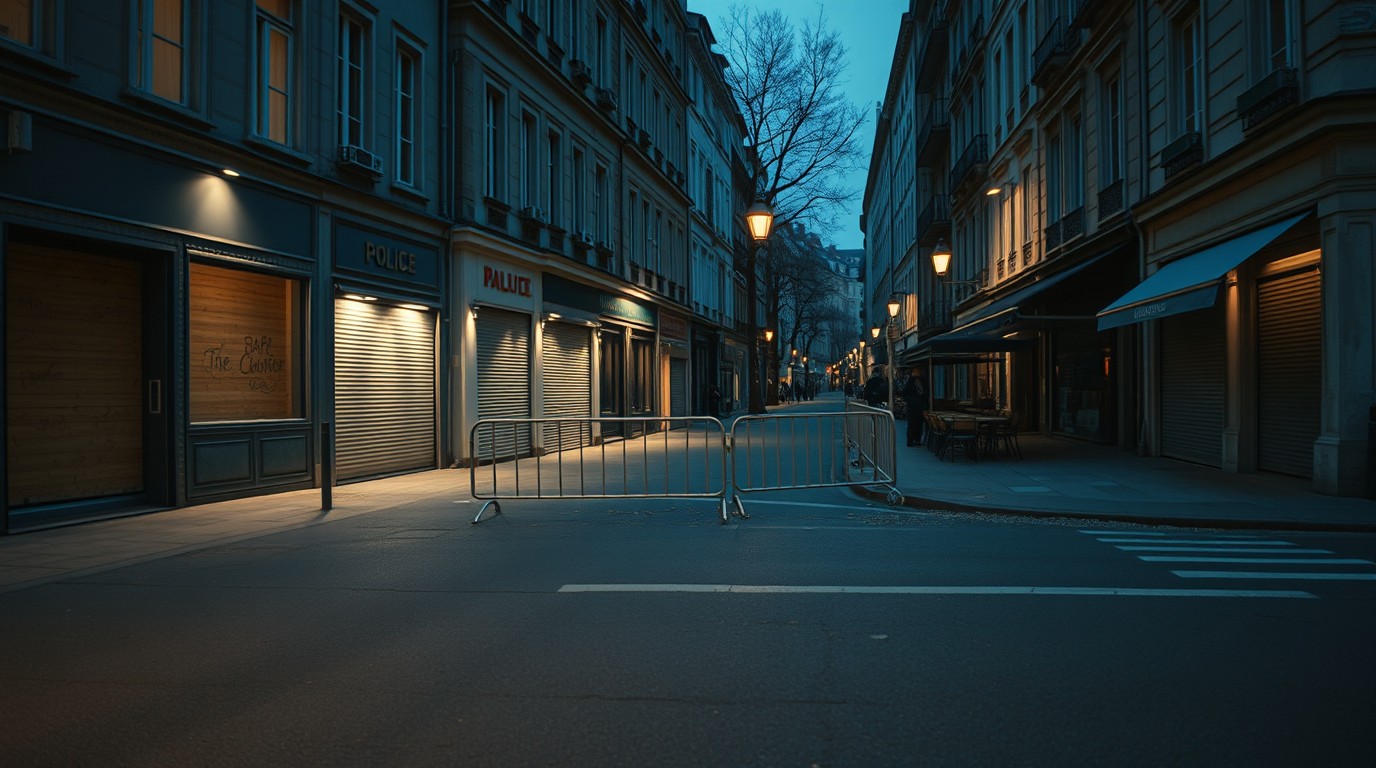
France's Prime Minister, Sébastien Lecornu, announced on October 19, 2026 that he had asked prefects to activate partial, localized curfews starting that same night, following a weekend of riots that left more than 2,400 detained and close to 1,000 security officers injured, according to The Guardian.
The October 17 Saturday protests, convened by students, teachers, parents, unions and workers against the cost of living, drew more than 500,000 people across the country, AFP reported. Intelligence services had anticipated 200,000 demonstrators, The Guardian noted. Interior Minister Laurent Nuñez acknowledged that Monday that police lost control in several cities and that there was a lack of anticipation; he offered his resignation and President Emmanuel Macron rejected it, asking him for transparency on the planning failures and new operational methods. For Mexico, the episode serves as a public policy case study: it shows the sequence of instruments a G7 government activates when a demand over income and cost of living turns into a public order crisis, from police deployment to mobility restrictions and labor relief.
The announced package combines public order, mobility and economic compensation:
- Partial, territorially targeted curfews; Lecornu ruled out a restriction for all of Paris and did not detail which cities or what form they would take, according to The Guardian. - 100% labor suspension for affected businesses starting Tuesday, October 20, and a liquidity support fund, according to the British newspaper's coverage. - A judicial operation to review social media videos and identify those responsible, according to the same coverage.
Authorities estimate more than 2,000 businesses damaged and losses in the hundreds of millions of euros. A state of emergency was not ruled out; Lecornu considered it less suitable than targeted restrictions.
The next milestones are the mapping of municipalities to be published by the Interior Ministry and the operational review report Macron commissioned from Nuñez. The signal for the region: the response combines protection of jobs and businesses with police deployment, a pattern other governments under cost-of-living pressure are following.
This article was written with the assistance of artificial intelligence from verified sources and reviewed by a human editor before publication.