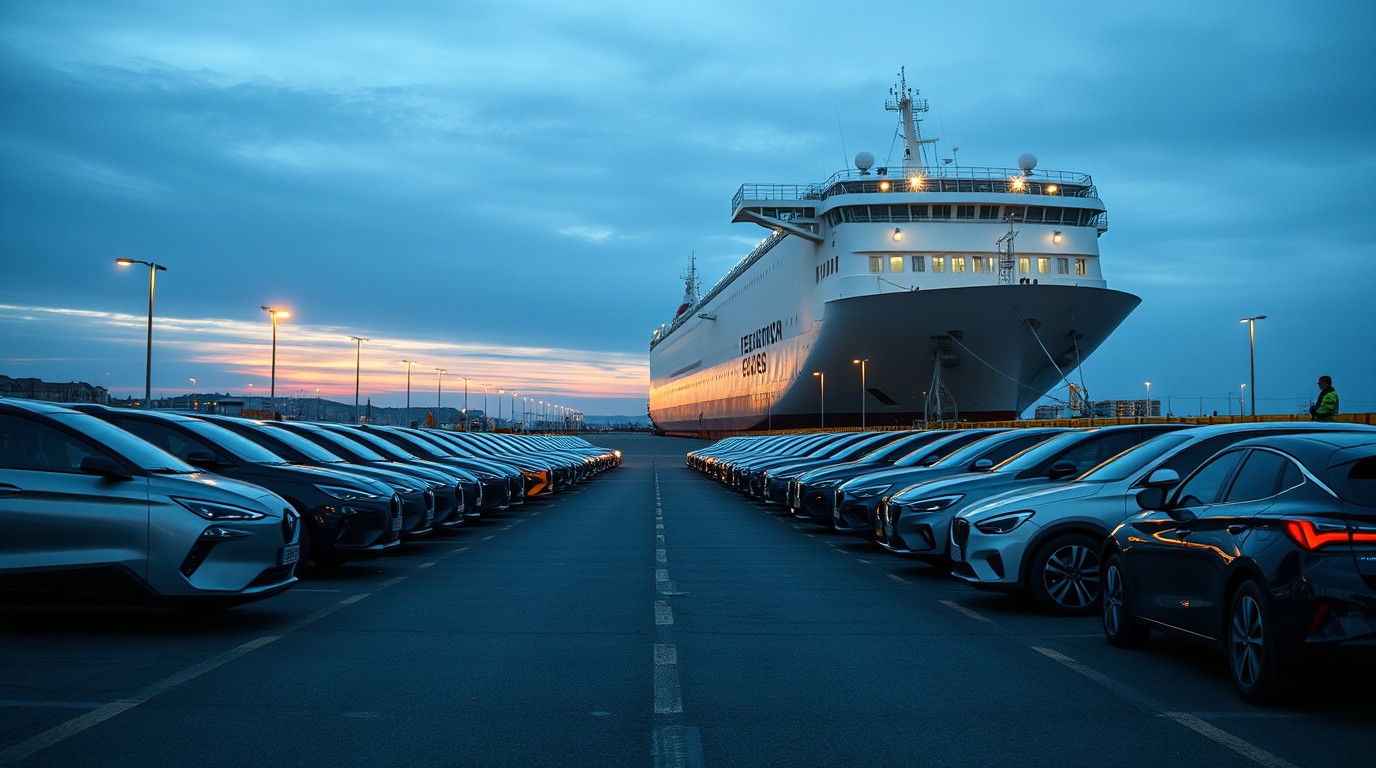
The European Union will cap imports of hybrid vehicles from China at 350,000 units a year starting in December, under a four-year agreement confirmed by the European Commission and reported by The Guardian on October 12, 2026. The quota will be applied through World Trade Organization safeguard measures.
Imports of Chinese hybrids have grown strongly: around 800,000 battery and plug-in hybrids are expected to be sold in the bloc this year, and Chinese hybrid exports to the EU tripled to 6,700 million euros in the first half, from 2,200 million a year earlier, according to Chinese customs data. The deal came after China rejected on October 8 the European request to voluntarily limit those shipments, according to Infobae, which cited the Financial Times. For Mexico the figure matters: the country competes in the same assembly and export business toward North America, and the quotas and local content rules that Europe is now introducing sketch out the terrain where access for Mexican vehicles and auto parts will be defined.
Brussels expects the quota to halve China's share of the European hybrid market, currently 6%, to around 3%. A safeguard makes it possible to apply the limit without the prior investigations that anti-dumping procedures require. Vehicles exceeding the limit will not pay tariffs: they will be held at customs in European ports. Chinese cars assembled inside the EU, such as those made in Hungary or those planned in Spain, fall outside the quota, while European companies that produce in China are covered. As part of the agreement, China will eliminate tariffs on some European auto parts and halve those on footwear, olive oil and ice cream. A European official indicated that dialogue on various products will continue and that the understanding does not close the process.
The next signal is in Brussels: European leaders will discuss this week a Franco-German proposal to block access to the single market for certain goods in the face of developments affecting European interests, such as a rare earths restriction, and the Commission is preparing a supply chain diversification rule and a public procurement law with a European stamp.
This article was written with the assistance of artificial intelligence based on verified sources and reviewed by a human editor before publication.