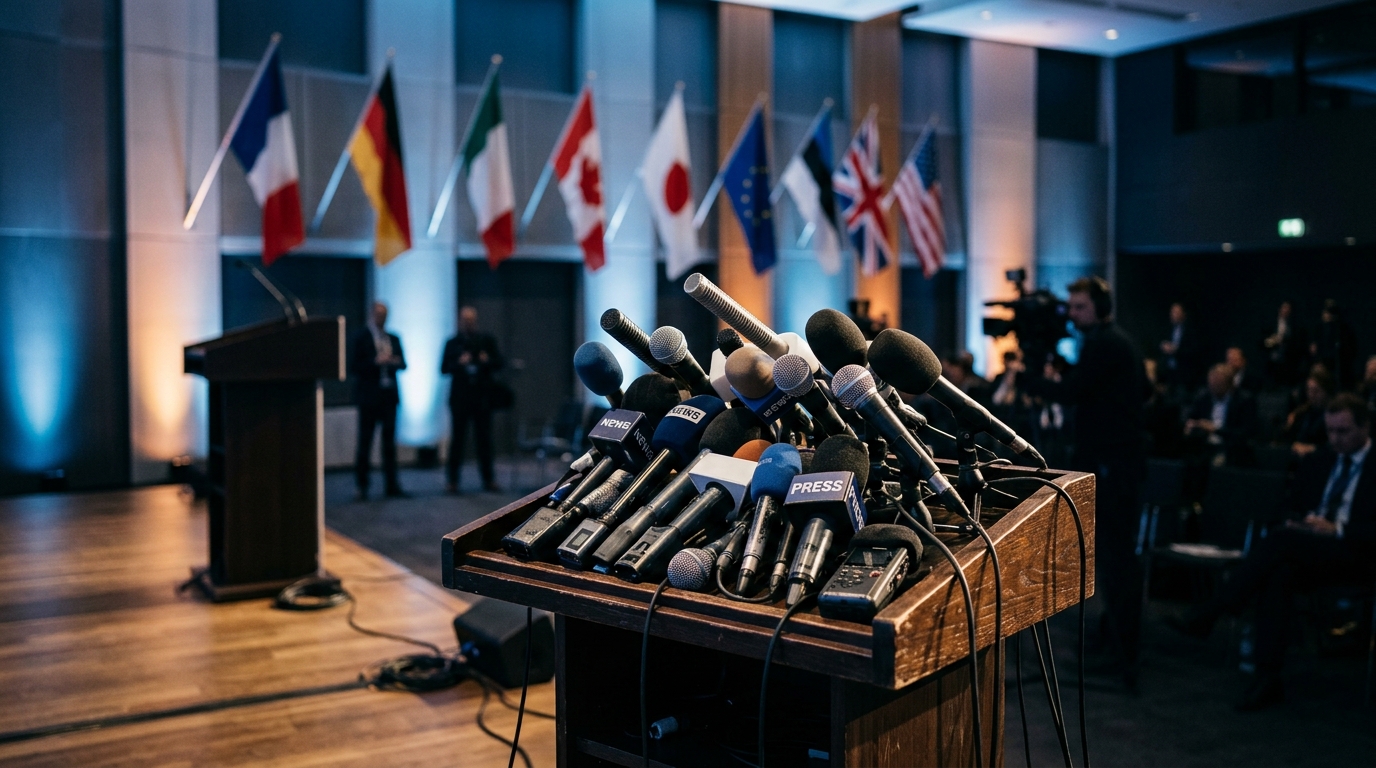
Mexico's Secretary of Economy, Marcelo Ebrard, reached an agreement with Jensen Huang, CEO of Nvidia, for the executive to visit Mexico to advance artificial intelligence, as reported by Forbes México. The agreement was announced on September 2, following the G20 ministerial meeting in Chapel Hill, North Carolina.
The ministerial summit placed artificial intelligence at the center of the multilateral economic agenda, at a moment when countries are defining the rules for its adoption and governance. The United States proposed a policy framework for emerging technologies to the group, and trade ministers signed a declaration to promote human-centered innovation and preserve national sovereignty in the governance of these technologies, according to El Universal. For Mexico, the agreement connects with the public push to build AI capabilities: Huang himself has stated that Nvidia's AI supercomputers are built in Mexico.
At the meeting, Ebrard argued that Mexico must strengthen its artificial intelligence capabilities, noting that AI's impact on the economy will be comparable to what electricity brought to manufacturing. Beyond the agreement with Huang, the secretary met with U.S. Secretary of Commerce Howard Lutnick to advance North American trade talks and innovation discussions; with Sam Altman, CEO of OpenAI; with Tom Brown, co-founder of Anthropic; with Henna Virkkunen, Executive Vice President of the European Commission for Technological Sovereignty; and with South Korea's Minister of Trade, Kim Jung-kwan. Huang, quoted in the ministry's official statement, said he looks forward with enthusiasm to visiting Mexico. G20 economies account for roughly 85% of global GDP and approximately three-quarters of international trade.
Huang's visit to Mexico, with a date yet to be confirmed, is the next milestone in an agenda that connects AI supercomputer production in the country with the North American technology conversation. The announcement of a timeline will set the pace for the next round of bilateral agreements and track Mexico's place in that infrastructure chain.
This article was produced with artificial intelligence assistance from verified sources and reviewed by a human editor before publication.