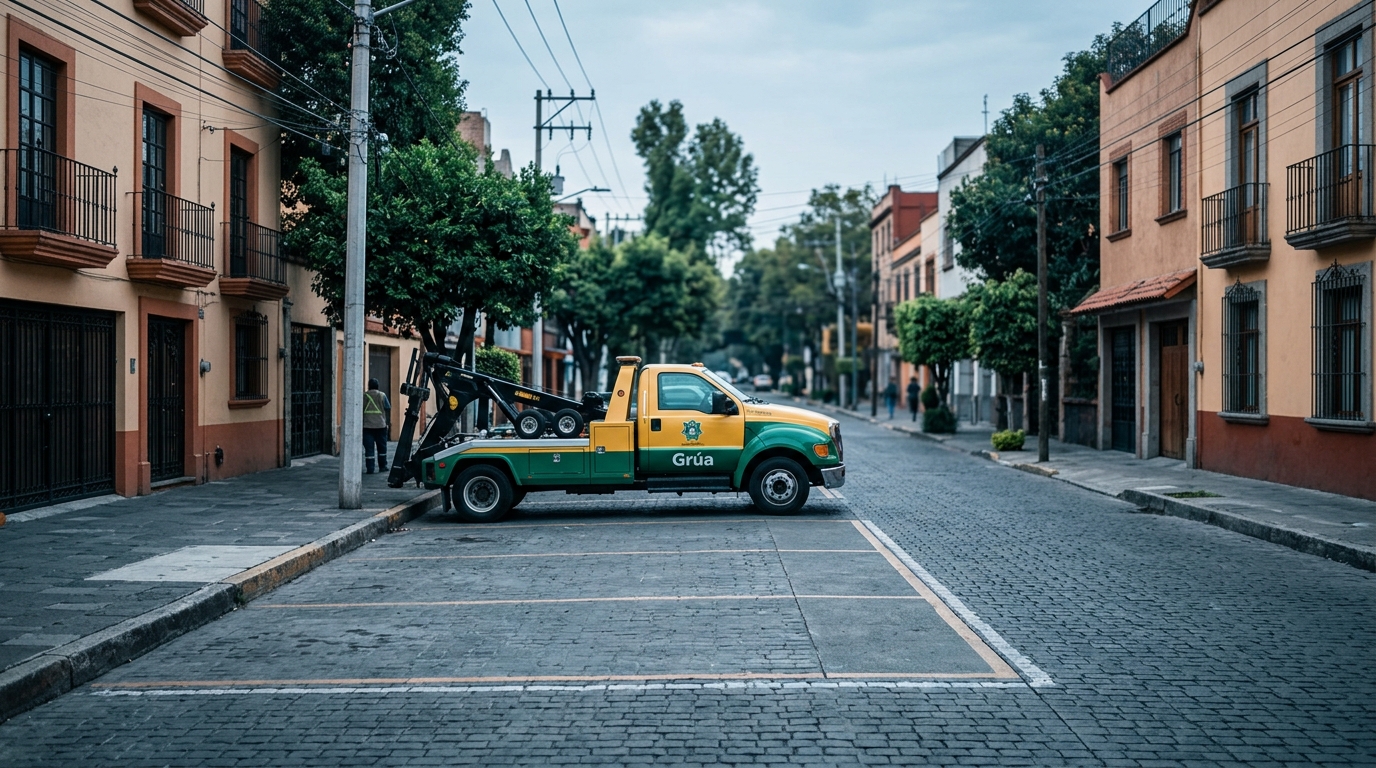
Coyoacán borough reported on August 16 that its vehicle removal program has accumulated nearly nine thousand actions, with 1,412 vehicles towed and 7,519 formally warned on public streets. The figure was consolidated with the launch of a new operation coordinated with Mexico City's Secretariat of Citizen Security (SSC-CDMX).
The operation is part of the Escudo Coyoacán strategy, active since 2021, which responds promptly to abandoned vehicles on public roads linked to security and sanitation hazards. According to Excélsior, the strategy targets the recovery of public space, traffic order, and the elimination of sanitation hazards, with participation from the SSC-CDMX, the Undersecretary for Traffic Control, and federal forces. The case illustrates a local urban governance model in which a borough coordinates a routine task with all three levels of government: clearing streets and restoring usable space for residents. For Mexican and Latin American cities, where abandoned vehicles are a recurring problem, the experience offers an operational roadmap with cumulative figures and an inter-institutional coordination framework.
Borough mayor Giovani Gutiérrez Aguilar launched the new operation, marking 65 sessions since the start of his first administration, a period in which 13,000 on-site inspections have been conducted. The borough's Director General of Citizen Security, Aurora Monserrat Cruz Ramírez, explained that the program addresses units classified as priority one, previously identified and formally warned by the corresponding area, with two-to-three day towing sessions scheduled each month for vehicle intake at the impound lot. Commanders from Traffic Zone 4 South of the Traffic Undersecretary, the capital's Auxiliary Police, and the Secretariat of the Navy attended the launch.
The program maintains a monthly operations schedule, giving the borough a foundation to sustain the pace of removals through the rest of the year. The cumulative total, now approaching nine thousand actions, will be updated with each new session and will continue measuring progress in the street-recovery strategy.
This article was drafted with artificial intelligence assistance from verified sources and reviewed by a human editor before publication.