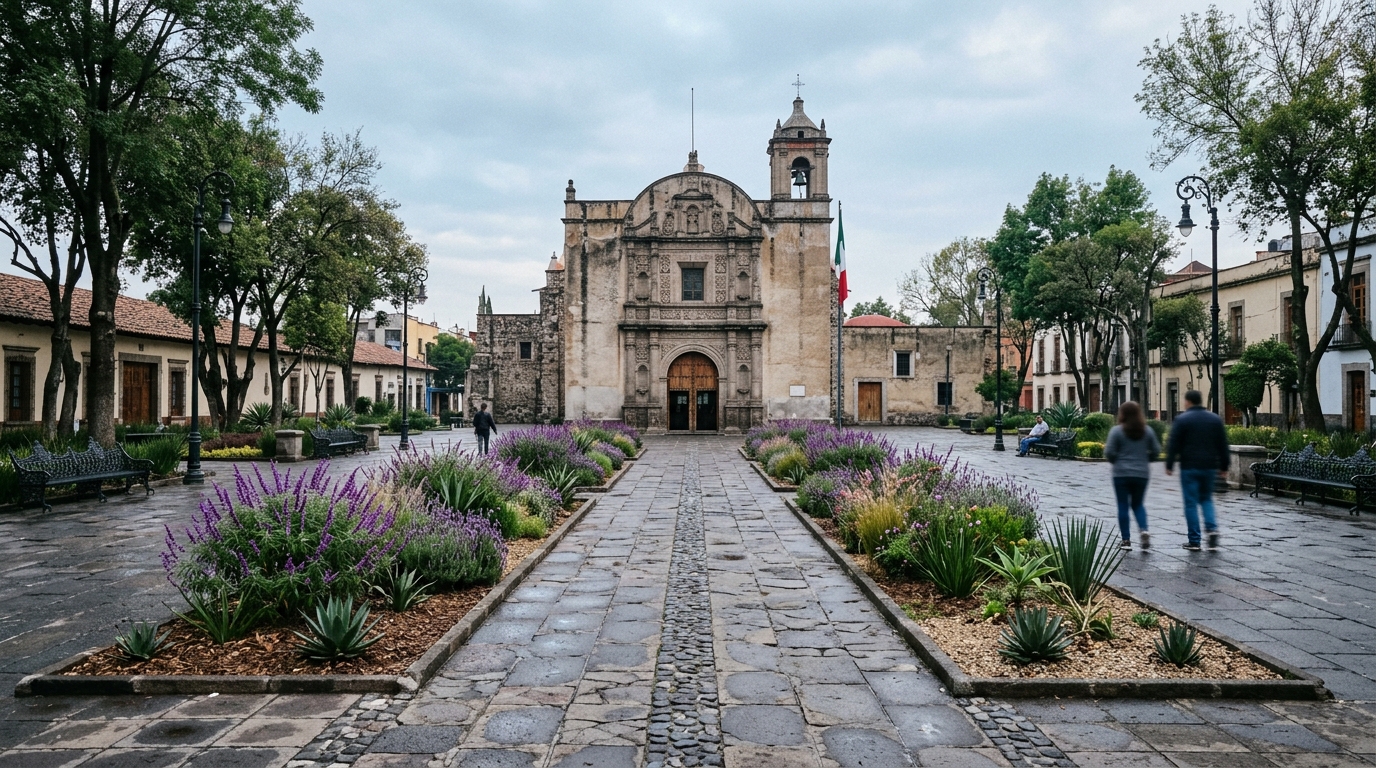
The Coyoacán borough government is carrying out the rehabilitation of Plaza de la Conchita, authorized by the National Institute of Anthropology and History (INAH) on 29 June 2026. According to Milenio, the intervention covers 3,352 square meters of green areas and seeks to preserve the layout and historic materials of the plaza.
The plaza is one of the most emblematic meeting points in the borough, and its walkways and green areas preserve the traditional look of the neighborhood. The intervention combines two projects: the renovation of vegetation, cleaning and restoration of rounded-stone and cobblestone pieces carried out by the borough, and the Participatory Budget resources, voted by the community, for the upkeep of the planters. The works are carried out without altering the elements that are part of its identity, the borough said. With native species that attract fauna, the site will become a pollinator garden. The case puts a local policy design dilemma on the table: the tension between perceived security and the openness of a space with heritage value.
In parallel, the neighborhood is debating whether the plaza should be closed. According to La Jornada, a neighborhood assembly on 22 May chose the installation of railings among four proposals, the most voted option, in response to alcohol consumption, theft of furniture and graffiti on the chapel facade. The INAH considered the railings viable, subject to administrative procedures given that it is a heritage zone, while the borough has expressed its preference for keeping the site open. The pollinator species plan, similar to that of the Hidalgo garden, corresponds to the borough and not to the community project, the Community Participation Commission specified. The current intervention integrates salvias, shrubs and agaves, among them Mexican scarlet sage, muitle and salmiana agave, species that La Crónica de Hoy lists as part of the garden. The rehabilitation authorization corresponds to INAH number 309/26.
The works are ongoing, and the borough has noted that any action in spaces with historic value is carried out within the legality of the heritage protection institutions. The decision on the railings remains subject to the administrative procedures the INAH has indicated, a next episode worth following closely.
This story was written with the assistance of artificial intelligence based on verified sources and reviewed by a human editor before publication.