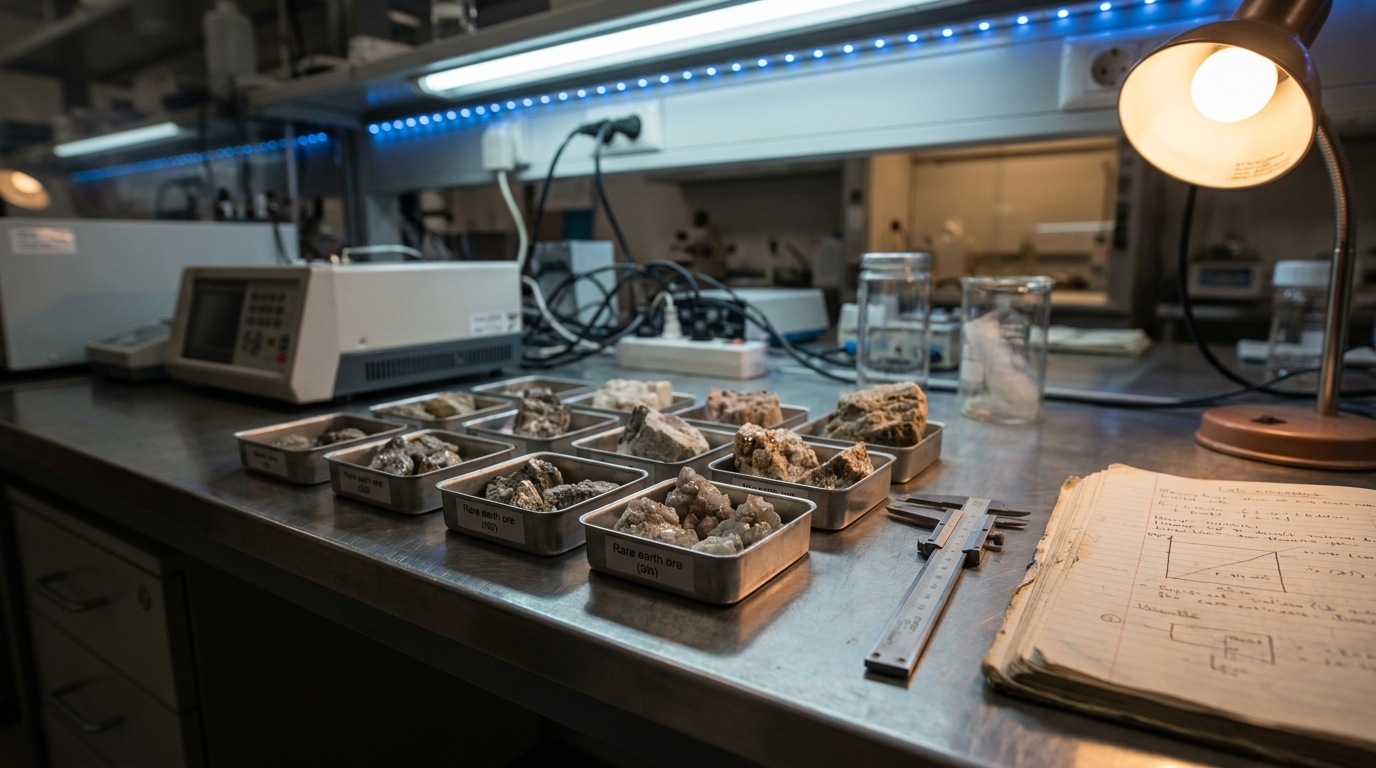
China reaffirmed this week that its restrictions on exports of rare earths and other dual-use materials to Japan remain in force. The signal coincides with a dedicated G7 session on critical mineral supply security in Évian, and has already begun reshaping the global supply chain for strategic magnets used in electronics, automotive, and defense.
Chinese foreign ministry spokesperson Lin Jian stated that rare earths qualify as dual-use materials under Chinese law and that the ban on military applications in Japan stands despite diplomatic requests. According to [Mining.com](https://www.mining.com/china-reaffirms-japan-rare-earth-ban-despite-us-request/), Tokyo has in response assembled a trilateral buyer club with France and Canada, along with a deal worth 1.6 billion Australian dollars with Australia to diversify its supply. The strategic read for Latin America is clear. The continent holds significant reserves of lithium, copper, and heavy minerals now caught up in the new contest for suppliers politically aligned with the major industrial powers.
The pressure is moving private capital. [Bloomberg](https://www.bloomberg.com/news/articles/2026-06-11/japan-s-shin-etsu-plans-new-rare-earth-refinery-to-secure-supply) reported on June 11 that Shin-Etsu Chemical, one of Japan's largest rare earth magnet manufacturers, will build a domestic refinery in Fukui prefecture. The plant aims to secure supply of neodymium, dysprosium, and terbium magnets for the automotive, consumer electronics, and aerospace sectors. Sector data show that Chinese rare earth exports to Japan contracted more than eighty percent since the close of the first quarter. Japan has historically relied on China for more than sixty percent of its rare earth imports, a concentration Tokyo acknowledges as a structural vulnerability.
The Évian meeting will produce specific declarations on critical minerals, and the bilateral agreements Japan signs with G7 partners will set the timeline. Latin America appears on that map as a destination for new exploratory investment on shorter-than-usual timelines, a window that countries with heavy mineral potential can capitalize on if they move quickly to organize their regulatory and environmental impact frameworks.
Fuentes:
- https://www.mining.com/china-reaffirms-japan-rare-earth-ban-despite-us-request/
- https://www.bloomberg.com/news/articles/2026-06-11/japan-s-shin-etsu-plans-new-rare-earth-refinery-to-secure-supply