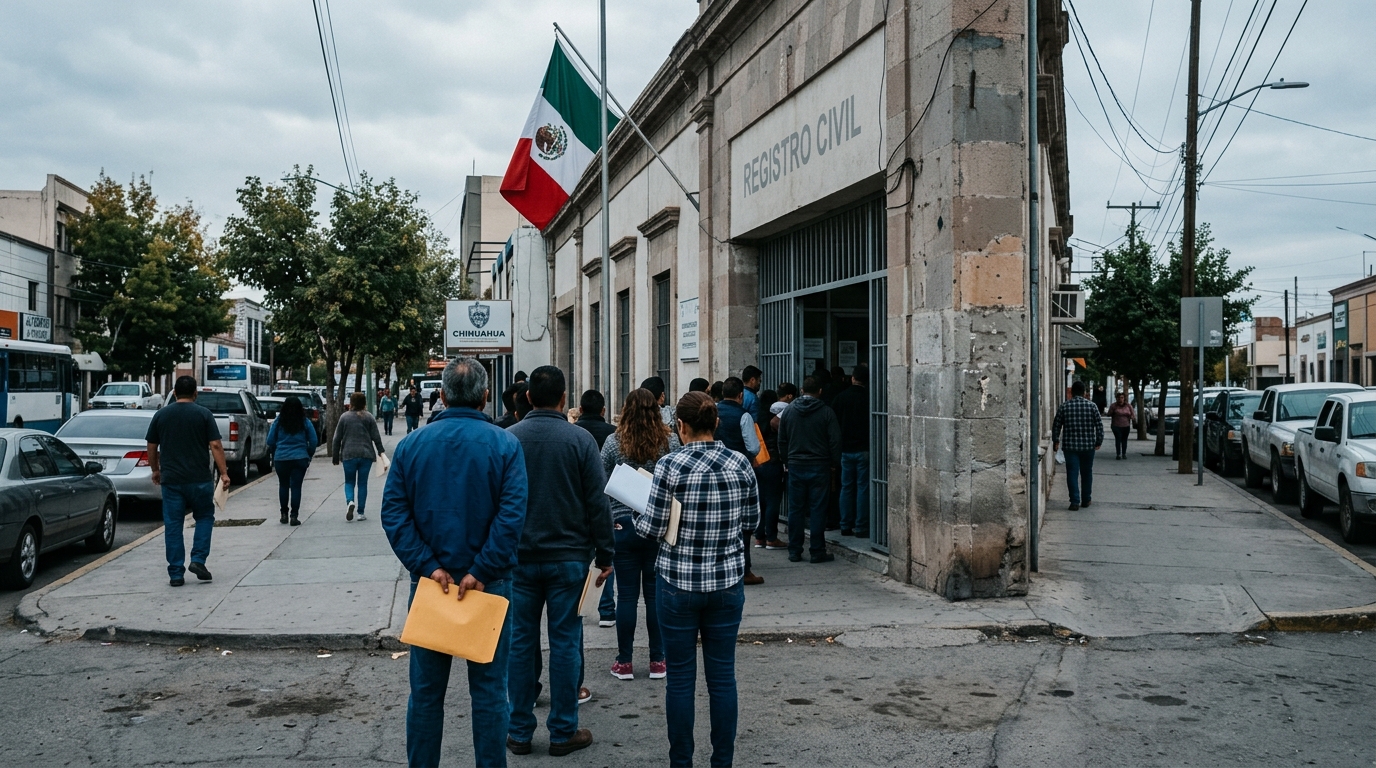
The Government of Chihuahua launched on August 10 the Soy México 2026 program, which allows U.S.-born children of Mexican mothers or fathers to obtain recognition of their Mexican nationality at no cost, valid through November 30 at ten Civil Registry offices.
The program fits within the binational dimension of local public policy. During the current administration, Soy México has processed 31,345 dual-nationality recognitions for persons born abroad, reported Quadratín Chihuahua. Four out of every ten dual-nationality birth certificates generated in Mexico result from the state's work, according to the Government of Chihuahua. The free process reduces administrative barriers for beneficiaries seeking access to health, education, employment, and social security services. Recognition guarantees the right to identity and does not require renouncing U.S. citizenship rights, in a context of heightened attention to the binational migration phenomenon.
Civil Registry Director Margarita Alvídrez reported that the process was exempted from fees and from translation and apostille requirements, representing savings of approximately 1,035 pesos per application. Participating offices are located in Ciudad Juárez, Nuevo Casas Grandes, Delicias, Ojinaga, Hidalgo del Parral, Camargo, Cuauhtémoc, Jiménez, Chihuahua, and Guachochi; in the border city, the Bellavista, Pueblito Mexicano, and El Mezquital offices operate from 9:00 to 14:00 hours. Applicants must present their U.S. birth certificate, the Mexican parent's birth certificate, and a photo ID. When a minor's application is filed by someone other than the parents, a simple power of attorney letter is required. Upon completion, applicants will receive their birth certificate and CURP at no cost.
Chihuahua's model was presented before the Senate of the Republic together with civil society organizations, which proposed replicating it nationwide. The program will remain open through November 30, and the cumulative figure of 31,345 applications marks a trend in dual-nationality access.
This article was written with artificial intelligence assistance from verified sources and reviewed by a human editor before publication.