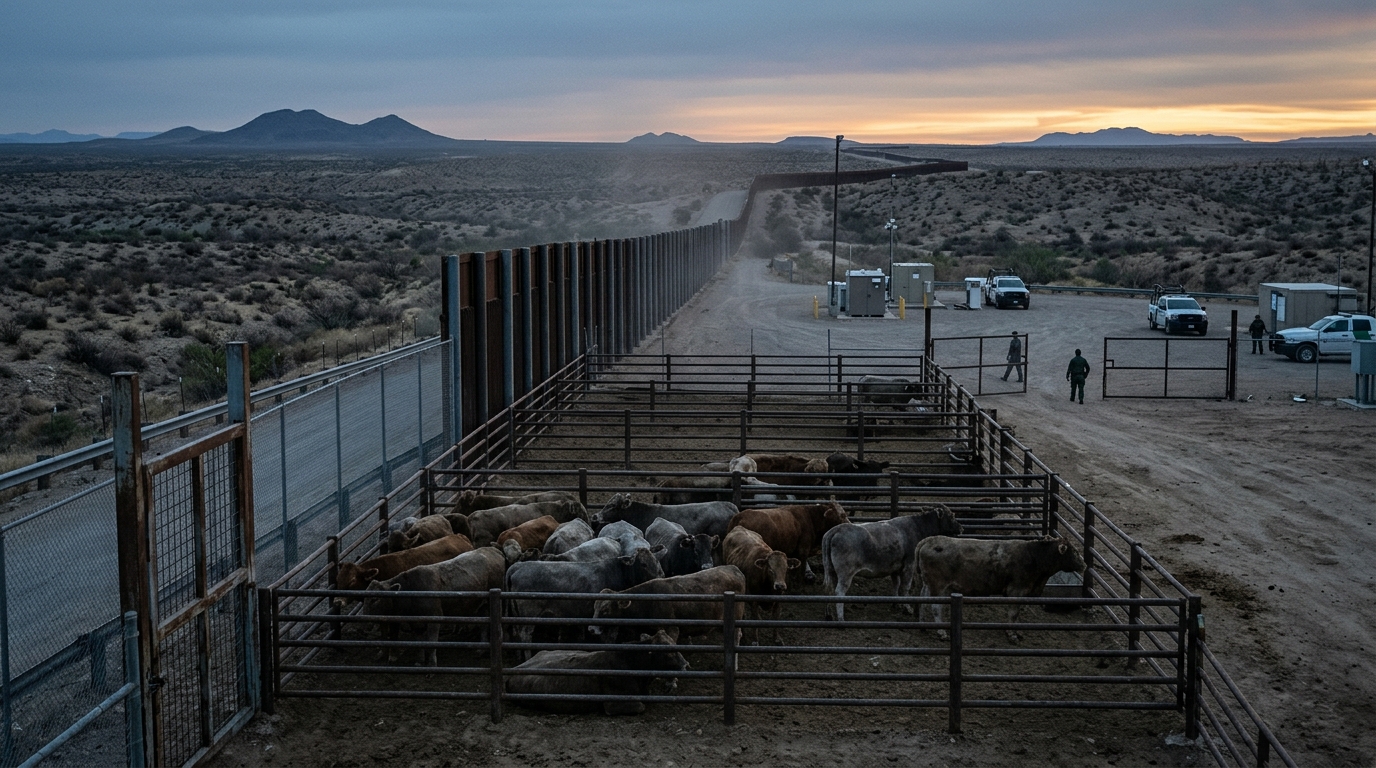
The Agua Prieta crossing into Douglas, Arizona, reopens on August 24, marking the first export movement of live Mexican cattle in more than a year, according to Excélsior, citing U.S. Secretary of Agriculture Brooke Rollins. Meanwhile, Chihuahua has recorded more than 137 screwworm cases across 27 municipalities as of August 13, El Universal reports.
The closure, in effect for more than a year due to the pest alert, left Chihuahua producers without export access and with estimated losses approaching one billion dollars, according to figures cited by El Universal. The pest has been detected in 20 states across Mexico as well as in Texas and New Mexico, and reached Chihuahua on July 14 with the first case confirmed in Hidalgo del Parral. The United States identified Sonora and Chihuahua as the lowest-risk regions based on their inspection systems, which explains why the reactivation begins at Douglas and will proceed in phases toward San Jerónimo-Santa Teresa and Palomas-Columbus, the two crossings most relevant to Chihuahua.
Chihuahua is running a state-level Screwworm Control and Eradication Campaign backed by 36.6 million pesos, 215 trained veterinarians, and 422 monitoring traps, according to the Secretaría de Desarrollo Rural. This week, the release of millions of sterile flies produced at a plant in Chiapas began to suppress the transmitting fly, and the state government presented a sanitary protocol to the Unión Ganadera Regional for application across all 67 municipalities. Cattle crossing into the United States will face additional inspections, including an ivermectin dip bath and trained detection dogs, Excélsior reported. "The screwworm hasn't reached us yet, but it is worrying," Alfredo Baca, a producer from Buenaventura, told El Universal, pointing to the quarantine risk for ranches without export access.
The August 24 reopening leaves no confirmed date for the San Jerónimo-Santa Teresa and Palomas-Columbus crossings, the two points most critical to Chihuahua. Progress on sanitary containment in the coming days will determine whether that timeline shortens, and will serve as the clearest signal for when cross-border cattle trade normalizes.
This article was produced with artificial intelligence assistance from verified sources and reviewed by a human editor before publication.