The Comisión Federal de Electricidad (CFE) Development Program 2026-2030, unveiled on August 27, projects investments of approximately 740 billion pesos, of which 54 percent will be financed with private capital off the company's balance sheet, according to El Financiero.
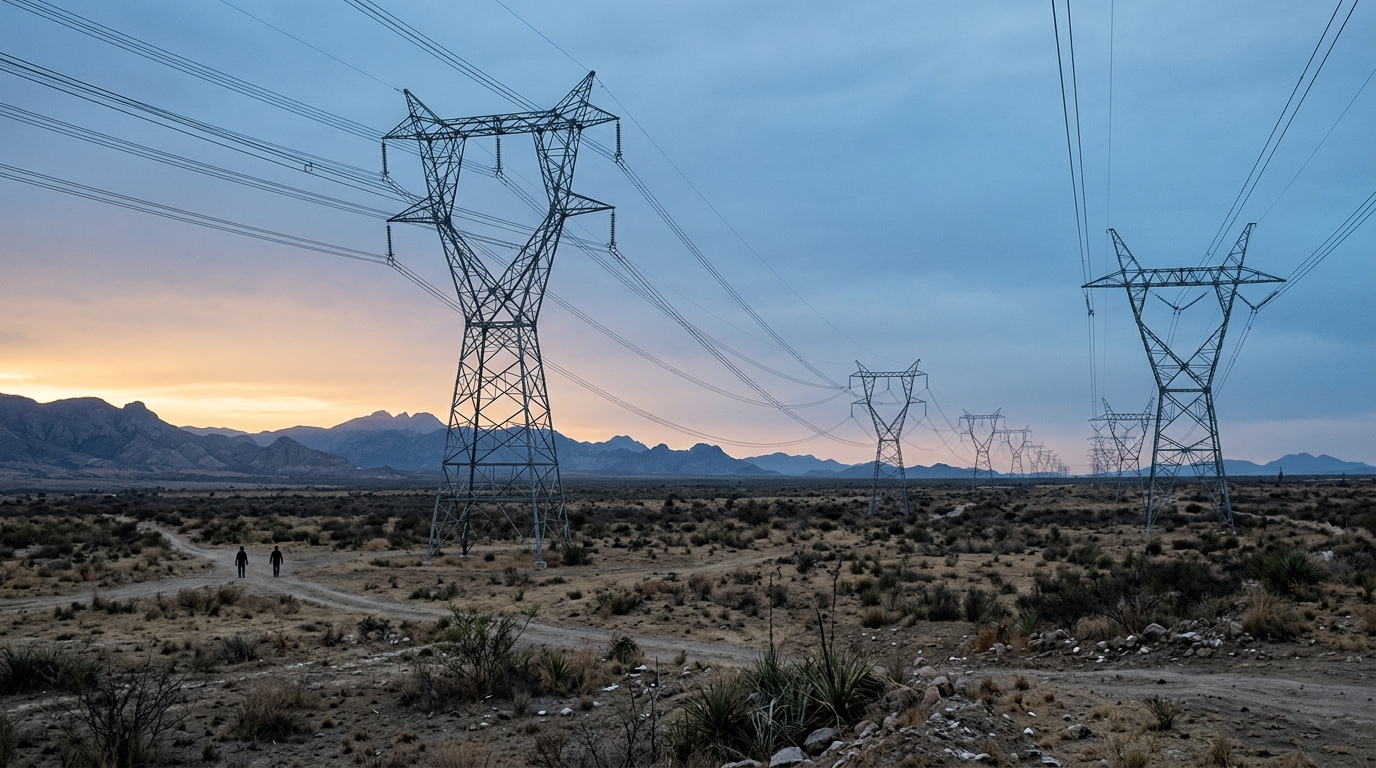
The document replaces the company's previous Business Plan and concentrates the expansion on 52 generation projects totaling 18.5 gigawatts, 175 transmission lines spanning 7,500 kilometers, and four distribution programs. Beyond the initial announcement focused on total amounts, the key new detail lies in the mechanism: the Mixed Investment Schemes, in which CFE retains at least 54 percent participation through in-kind contributions and ordinary rights, while the private partner covers the remaining 46 percent in capital, according to Bloomberg Línea. The structure allows the network to be expanded without the resources appearing as debt on the state-owned company's balance sheet, at a time when energy demand is rising and the national electric system faces congestion.
The program places mixed investments at 16,700 million dollars, approximately 335 billion pesos, with roughly 13.8 gigawatts of generation capacity, primarily renewable, according to El Financiero. A second vehicle is the Long-Term Producer, in which the private party bears the investment, CFE commits to purchasing the generated energy, and the assets transfer to the State at the end of the contract. The remaining 46 percent is financed on-balance-sheet: debt issuances of more than 7,500 million dollars and approximately 2,500 million via Fibra E, directed at transmission and distribution, activities that are exclusive to the State. In renewables, CFE has already awarded mixed contracts for 8 gigawatts in wind and photovoltaic capacity, and has 5.8 gigawatts still pending in concentrated solar, geothermal, and cogeneration.
The plan leaves debt issuance and Fibra E as the vehicles to watch in the coming months. Bloomberg Línea also reported that CFE is analyzing a new Fibra E equity issuance of 1 billion dollars, a step aligned with this mixed-financing route.
This article was drafted with the assistance of artificial intelligence from verified sources and reviewed by a human editor before publication.