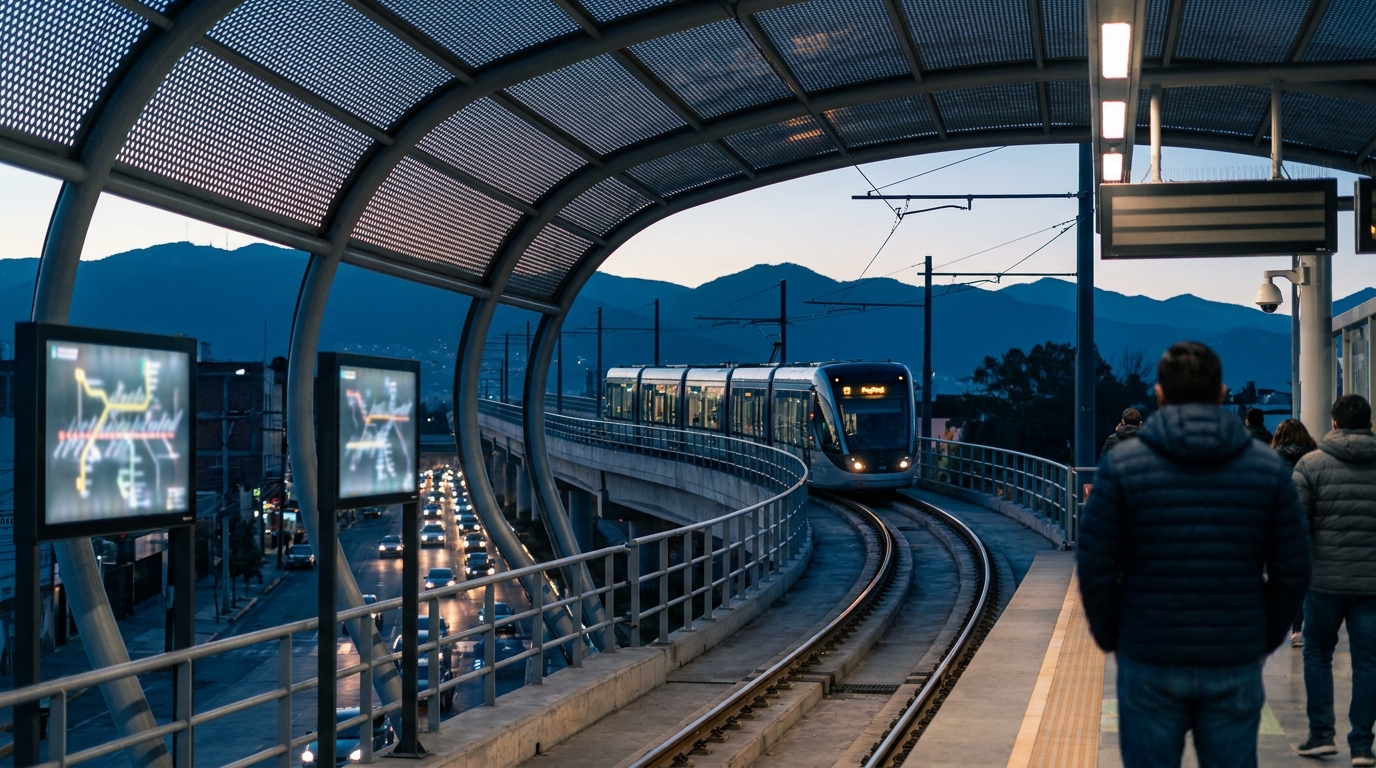
Mexico City has deployed a comprehensive mobility plan to move up to 87,000 fans per World Cup 2026 match, integrating the system with a bilingual chatbot that guides visitors in real time. The operation combines light rail, taxis with regulated bays, micromobility, and a last-mile pedestrian ring.
According to [Expansión Política](https://politica.expansion.mx/cdmx/2026/06/10/plan-de-movilidad-mundial-2026-como-llegar-estadio-azteca), the controlled zone begins 1.6 kilometers from Estadio CDMX and offers seven pedestrian routes ranging from twelve to thirty minutes. The Light Rail operates express service and is projected to move between 60,000 and 70,000 people in the hours before each match, with the Xochimilco branch suspended three hours before kickoff. Park & Ride options at 500 pesos and Ride options at 350 pesos expand capacity from key points across the city; Ecobici and shared scooters add five strategic micromobility nodes.
The system works alongside [Xoli](https://www.eluniversal.com.mx/metropoli/mundial-2026-asi-es-xoli-el-chatbot-que-guiara-a-turistas-en-su-visita-por-la-cdmx-de-esta-manera-puedes-descargarlo-en-tu-celular/), the chatbot developed by the Agencia Digital de Innovación Pública and the city's Secretaría de Turismo, available 24/7 on WhatsApp in Spanish and English, according to El Universal. The tool handles queries on transportation, gastronomy, museums, events, and tournament data. Authorities confirmed the tool will operate after the World Cup as a permanent channel, and that 1,000 registered taxis with enabled bays will reinforce the Viaducto-Tlalpan, Renato Leduc, and Periférico polygons during each match.
The operation covers the five matches in Mexico City, with the Round of 16 final on June 29 among the capital's major calendar milestones and a Quarterfinal match scheduled for July 4. The Secretaría de Seguridad Ciudadana coordinates a single per-match protocol with Traffic and Civil Protection authorities.
The signal for the local ecosystem is that Mexico City is using the World Cup as a smart-city rehearsal operated in real time. The chatbot, last-mile infrastructure, and micromobility will remain as permanent fixtures, and travel-time metrics over the coming weeks will determine which practices get exported to Monterrey and Guadalajara before the tournament closes.
Fuentes:
- https://politica.expansion.mx/cdmx/2026/06/10/plan-de-movilidad-mundial-2026-como-llegar-estadio-azteca
- https://www.eluniversal.com.mx/metropoli/mundial-2026-asi-es-xoli-el-chatbot-que-guiara-a-turistas-en-su-visita-por-la-cdmx-de-esta-manera-puedes-descargarlo-en-tu-celular/