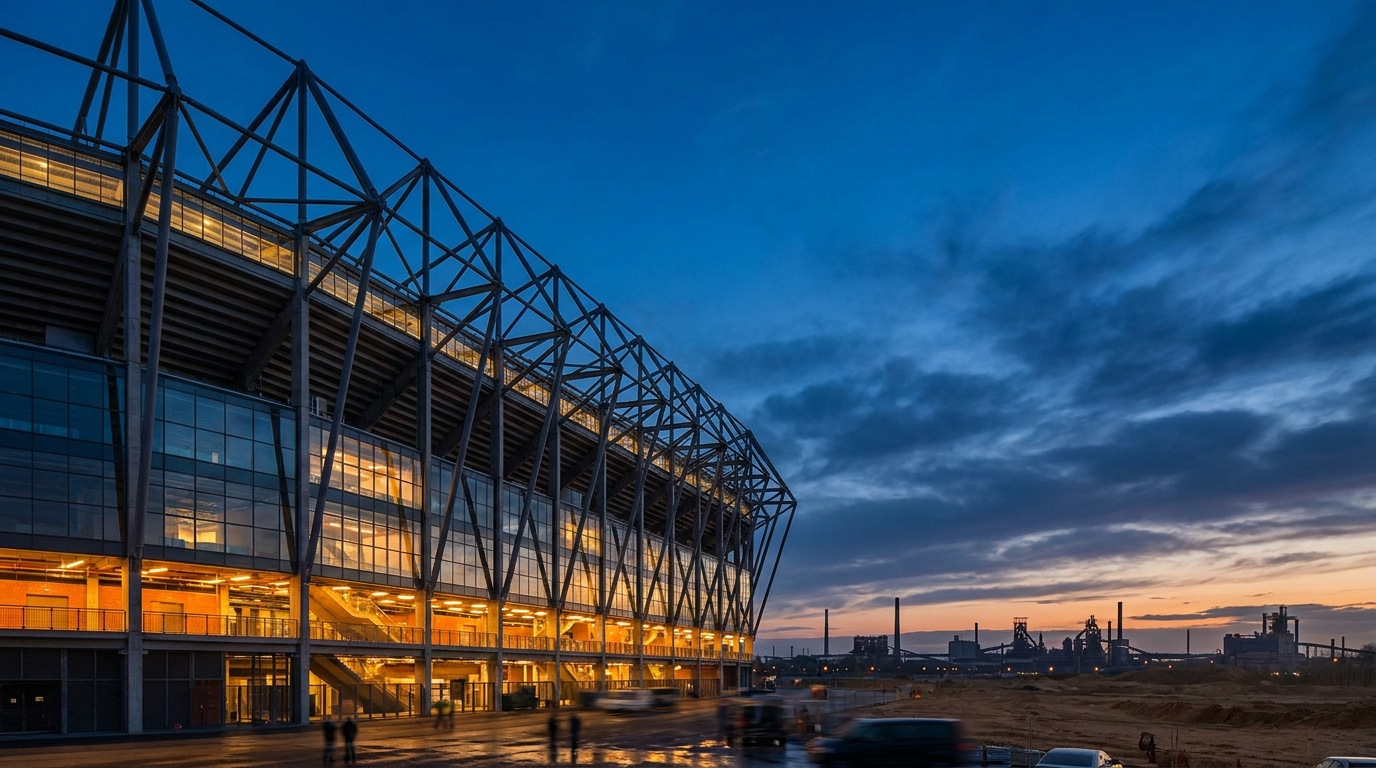
Estadio BBVA in Monterrey made its debut as a 2026 World Cup venue with the Group F match between Sweden and Tunisia, played on June 14 before 50,987 official spectators. The inauguration cemented Nuevo León on the international football calendar and opened a four-match sequence the stadium will host during the tournament.
According to [El Financiero](https://www.elfinanciero.com.mx/deportes/mundial-2026/2026/06/09/todos-los-partidos-en-el-estadio-monterrey-de-la-copa-del-mundo/), the stadium will host four matches in total: three in the group stage (Sweden vs. Tunisia, Tunisia vs. Japan, and South Africa vs. South Korea) and a round of 32 match on June 29. The venue does not host the Mexican national team, a fact that shapes the economic profile of the weekend's spillover, but the presence of four foreign national teams generates a distinct tourism dynamic. For Nuevo León, the strategic read is clear: the state is leveraging the World Cup as a platform for investment attraction and to reposition the Monterrey brand in the global sports market, with an eye toward future mega-events.
[Infobae](https://www.infobae.com/mexico/deportes/2026/06/15/pidio-perdon-antes-de-celebrar-la-historia-detras-del-primer-gol-del-mundial-2026-en-el-estadio-monterrey-en-el-suecia-vs-tunez/) reported that the first World Cup goal at the Monterrey stadium was scored by Sweden's Anton Salétros, and notes that Sweden won 5-1 over Tunisia. The stadium, inaugurated in 2015, has capacity for more than 53,000 spectators and is one of the most modern venues in Latin America. The municipal operation in Guadalupe activated road closures twelve hours before the match and deployed traffic security perimeters for the foreign and domestic fans who entered the venue. Effective occupancy exceeded 96 percent of capacity.
The next operational tests will come with Estadio BBVA's remaining World Cup fixtures in the days ahead. Hotel occupancy, economic spillover, and visitor mobility data reported by state authorities in the coming matchdays will be the first quantitative indicators for evaluating the hosting model Nuevo León is offering to future international events, and for positioning the state as a regional sports hub.
Fuentes:
- https://www.elfinanciero.com.mx/deportes/mundial-2026/2026/06/09/todos-los-partidos-en-el-estadio-monterrey-de-la-copa-del-mundo/
- https://www.infobae.com/mexico/deportes/2026/06/15/pidio-perdon-antes-de-celebrar-la-historia-detras-del-primer-gol-del-mundial-2026-en-el-estadio-monterrey-en-el-suecia-vs-tunez/